
 The TechQuilt
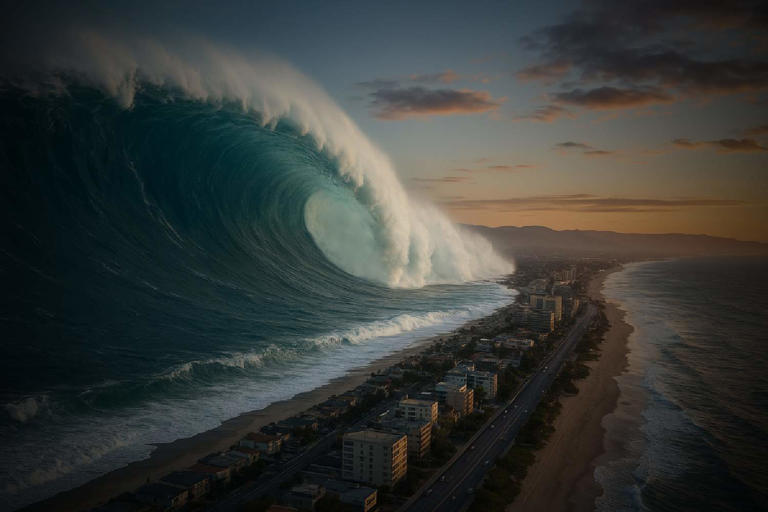
 Imagine an enormous wave, towering nearly 1,000 feet, about as tall as a skyscraper, rushing toward the shore with unstoppable force. This isn’t a disaster movie scene, it’s a real and growing concern for coastal regions of the U.S. Pacific coast.
What’s Behind the Mega Tsunami Warning?
A Virginia Tech study has issued a chilling wake-up call: the Cascadia Subduction Zone (CSZ)—a 600-mile fault line stretching from Northern California to Vancouver Island is accumulating massive tectonic pressure as the Juan de Fuca Plate slides beneath the North American Plate. Experts warn of a 15% chance of a magnitude 8.0 or higher earthquake in the next 50 years. If that happens, coastal lands could sink over 6 feet, and a mega-tsunami towering 1,000 feet could instantly strike cities like Seattle and Portland.
Why the Pacific Northwest Is on High Alert
The potential consequences are staggering. Coastal cities like Seattle, Portland, and surrounding regions could face:
- Instant flooding that sweeps cities off the map
- Miles of inundation inland, especially in low-lying zones like the Columbia River basin
- Permanent changes to landscapes and catastrophic damage to infrastructure, homes, and communities
Recovery efforts from such an event would be unimaginably complex.
Behind the Science: What Makes This Warning Credible?
Unlike typical tsunamis, a mega tsunami is triggered by sudden, massive geological shifts like megathrust earthquakes, landslides, or volcanic collapses. These waves dwarf standard tsunamis in size and destructive power. The CSZ’s seismic history, including the last massive quake in 1700, combined with modern computer modeling, confirms that coastal zones in the Pacific Northwest are on borrowed time.
Regions at Greatest Risk
States in the crosshairs include:
- Northern California
- Oregon
- Washington
Farther afield, Alaska and Hawaii also remain vulnerable to tsunami threats, though for different geological reasons.
The Way Forward: Preparedness and Mitigation
Scientists stress the urgency for:
- Advanced early-warning systems to alert communities instantly
- Resilient infrastructure, from seawalls to strengthened evacuation routes
- Community-based disaster plans to ensure faster, safer responses
These measures aren’t hypothetical, they’re critical to saving lives when minutes count.
Conclusion
The mega tsunami warning from Cascadia is not science fiction. It’s a credible possibility backed by geoscience and modeling. With geological cycles nearing their breaking point, U.S. Pacific coastal regions face a future that demands immediate preparedness. We must act now with smart infrastructure, reliable warnings, and community readiness before one of nature’s most destructive forces arrives unannounced.
 Avik Roy Chowdhury