

 The TechQuilt
 Science Fiction Becomes Reality: Meet the Robot Smaller Than a Grain of Salt
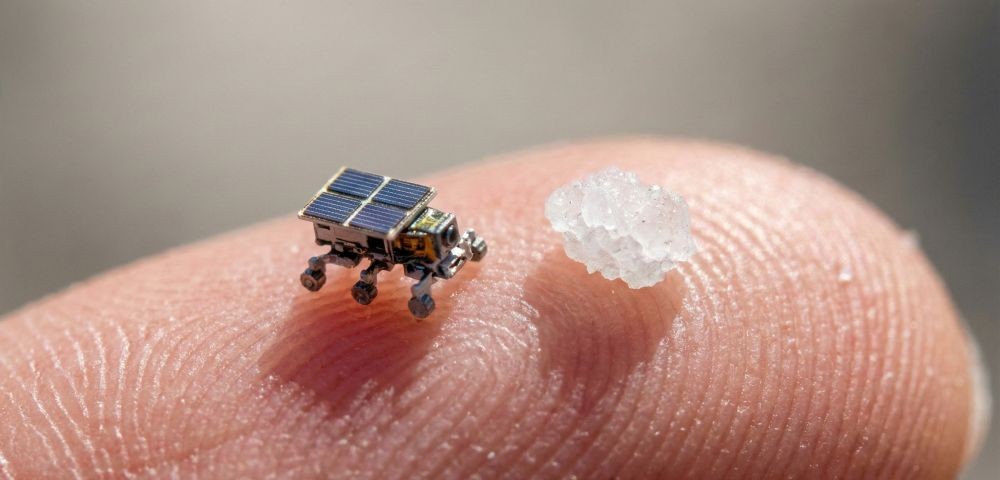
Imagine a robot so small that you could balance it on your fingertip alongside a grain of salt. Now imagine that this tiny machine has a brain, can think for itself, and runs entirely on light. This is not a scene from a futuristic movie. It is a real breakthrough from December 2025 that is changing the world of technology and medicine forever.
Researchers have successfully built the world’s smallest fully programmable and autonomous robot. This tiny solar-powered computer is about to revolutionize how we treat diseases and build microscopic devices. If you love technology and the future, you need to read every line of this story to understand why this invention is such a big deal.
What Is This Tiny Solar Robot?
This new robot is a marvel of modern engineering. Created by a team of scientists from the University of Pennsylvania and the University of Michigan, it measures less than 1 millimeter wide. To give you a better idea, it is smaller than the period at the end of this sentence.
Despite its microscopic size, it is a fully functional robot. It comes equipped with:
- Onboard Computer: A tiny brain that allows it to make decisions.
- Sensors: To detect changes in its environment like temperature.
- Solar Cells: To harvest energy from light.
- Actuators: To help it move around.
For decades, engineers struggled to make robots this small that could actually “think.” Previous versions were like puppets on strings that needed external wires or lasers to control them. This new robot is different. It is untethered and free to roam on its own.
How Does It Work?
Building a robot the size of a single cell comes with huge challenges. At this scale, swimming through water feels like swimming through thick honey or tar. Traditional motors and gears would just break or get stuck.
To solve this, the researchers invented a new way to move. The robot uses electrokinetic propulsion. It generates a tiny electrical field that pushes ions in the water around it. This creates a flow that pulls the robot forward. It is a silent and efficient way to swim without any moving parts.
The brain of the robot is equally impressive. It uses a special low-power computer developed at the University of Michigan. This computer is so efficient that it runs on just 75 nanowatts of power. That is over 100,000 times less energy than your smartwatch uses.
Why Is This A Game Changer?
You might be wondering why we need robots this small. The answer lies in the incredible potential they hold for the future of medicine and industry.
1. Revolutionizing Medicine
The biggest excitement is about what these bots can do inside the human body. Because they are the size of biological cells, they can travel to places no surgeon can reach. In the future, swarms of these tiny bots could be injected into the body to:
- Track down and destroy cancer cells.
- Repair damaged nerves.
- Monitor the health of individual cells.
- Deliver medicine directly to a sick organ.
2. Micro-Manufacturing
The Best Part? They Cost Pennies
Advanced technology usually comes with a high price tag. However, these robots are incredibly cheap to make. The researchers estimate that each robot costs roughly one penny to manufacture. This means we could produce millions of them to tackle large-scale problems without breaking the bank.
Conclusion
The invention of this tiny solar-powered robot marks a historic moment in science. We have moved from giant machines to invisible helpers that can sense, think, and act on their own. While we may not see them in hospitals tomorrow, the path is now open for a future where nanobots keep us healthy from the inside out. This is just the first chapter of a new era in robotics, and the possibilities are endless.