


 Avik Roy Chowdhury
 - The “Entry-Level” Compromise: The MacBook Neo targets the budget market with a $599 starting price, but it relies on the mobile-centric A18 Pro chip rather than the more capable M-series silicon.
- Performance Bottlenecks: While the A18 Pro is efficient, its limited 6-core CPU/5-core GPU configuration and non-upgradable 8GB RAM create a hard ceiling for multitasking and demanding workflows.
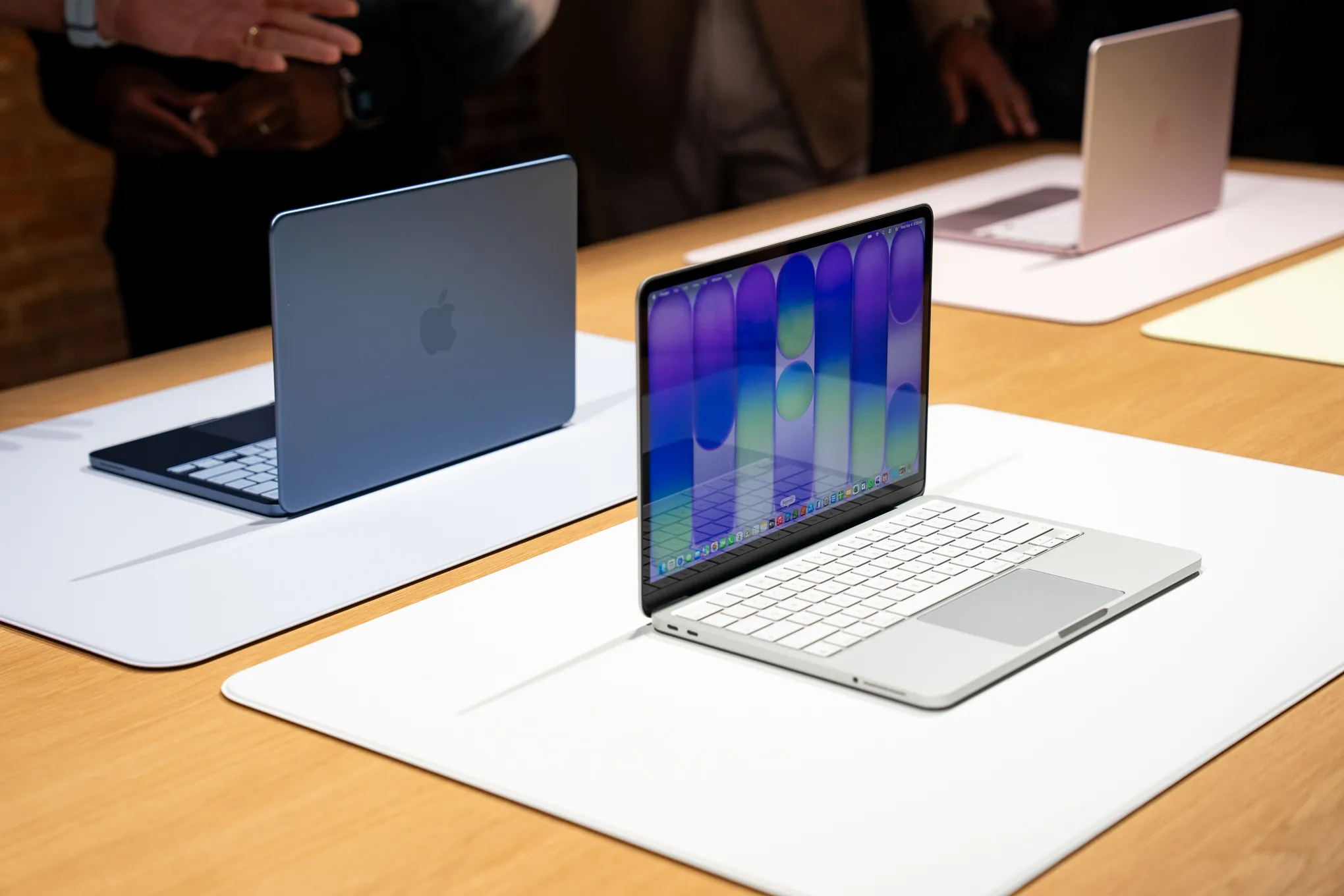
- A Visual Regression: Despite the new vibrant colorways, the hardware—specifically the mechanical trackpad and lack of MagSafe—remains a step behind the premium MacBook Air lineup.
Key Technical Specifications
| Feature | Specification |
| Processor | Apple A18 Pro (6-core CPU, 5-core GPU) |
| Memory | 8GB Unified Memory (Non-upgradable) |
| Storage | 256GB / 512GB SSD |
| Display | 13-inch Liquid Retina (2408×1506) |
| Connectivity | 2x USB-C (USB 3 & USB 2), Headphone Jack |
| Battery Life | Up to 16 hours (Video playback) |
| Starting Price | $599 ($499 for Education) |
How is the Apple MacBook Neo in terms of performance?
The MacBook Neo presents an interesting performance profile. By leveraging the A18 Pro chip—the same silicon driving the iPhone 16 Pro—Apple has created a machine that feels snappy for daily web browsing, document editing, and general media consumption. However, the editorial consensus is that this is not a device for heavy lifting.
The critical distinction here is silicon. Unlike the MacBook Air, which utilizes the M-series architecture (M5 in current models) designed specifically for desktop workloads, the A18 Pro is fundamentally mobile-first. The MacBook Neo’s 6-core CPU (2 performance, 4 efficiency) and 5-core GPU lack the thermal headroom and raw throughput of the M5’s 10-core CPU and 8-core GPU architecture. For a student or casual user, it’s a “good enough” experience, but for those who run memory-intensive apps or multitask heavily, the silicon difference will be stark.
The RAM Limitation: A Non-Negotiable Hurdle
Perhaps the most polarizing aspect of the MacBook Neo is the 8GB RAM limit. Because the A18 Pro uses an “Integrated Fan-Out Package” where the memory is literally fused onto the processor die, this 8GB ceiling is permanent. There is no configuration to upgrade it. In 2026, launching a “Pro” branded chip inside a laptop with only 8GB of memory is a significant bottleneck. macOS manages memory well, but as web-based apps and background services become more bloated, 8GB will struggle to keep pace with modern multitasking demands.
Hardware Trade-offs: Why the Cost-Cutting Matters
To hit that $599 price point, Apple has made deliberate hardware cuts. You’re trading away the MagSafe charging port, the premium Force Touch trackpad, and the high-speed Thunderbolt connectivity found on the MacBook Air. Furthermore, the two USB-C ports on the Neo are not created equal: one is limited to USB 2.0 speeds (480Mbps), which can be frustrating if you frequently transfer large files from external drives.
Final Verdict: Is it Worth the Hype?
The MacBook Neo is a calculated play by Apple. If you are a student, a light user, or someone who just needs a reliable machine for writing and browsing—and you are already deeply embedded in the Apple ecosystem—this is a compelling, high-quality “gateway” device. The design is beautiful, the battery life is solid, and the price is legitimately aggressive.
However, if you are looking for a long-term machine that can handle professional-grade tasks, look elsewhere. The lack of RAM expandability and the use of a mobile-optimized chip mean this laptop will show its age much faster than an M-series MacBook Air. For $599, you are paying for the Apple logo and a premium aesthetic, but you are also accepting a device that is essentially capped from the day you take it out of the box.

 The TechQuilt