


 The TechQuilt
 Wang Yi Responds as Trump Pushes NATO to Impose 100 Percent Tariffs on ChinaIntroduction
The trade relationship between the United States and China has once again come under the spotlight. U.S. President Donald Trump recently proposed that NATO members and allies impose tariffs as high as 100 percent on Chinese goods. The move, he argued, is necessary to penalize Beijing for purchasing oil from Russia, which Washington claims indirectly supports Moscow’s war efforts in Ukraine. This bold proposal has sparked widespread debate across the globe, raising questions about trade wars, global supply chains, and international diplomacy. In response, China’s Foreign Minister Wang Yi has pushed back strongly, making it clear that Beijing prefers peace, dialogue, and cooperation over confrontation.
Trump’s Tariff Proposal
President Trump’s tariff proposal is one of the toughest stances taken against China in recent years. His idea is that NATO and allied nations, particularly in Europe, should align with Washington to collectively impose 50 to 100 percent tariffs on Chinese imports. According to Trump, this would increase pressure on both Beijing and countries still buying Russian oil, making it harder for Russia to sustain its war in Ukraine.
Tariffs of this magnitude would not only target China’s trade with the U.S. but could also extend to Europe and other major economies. Such measures, if implemented, could significantly disrupt global trade, increase costs for consumers, and heighten already fragile economic conditions worldwide.
China’s Response Through Wang Yi
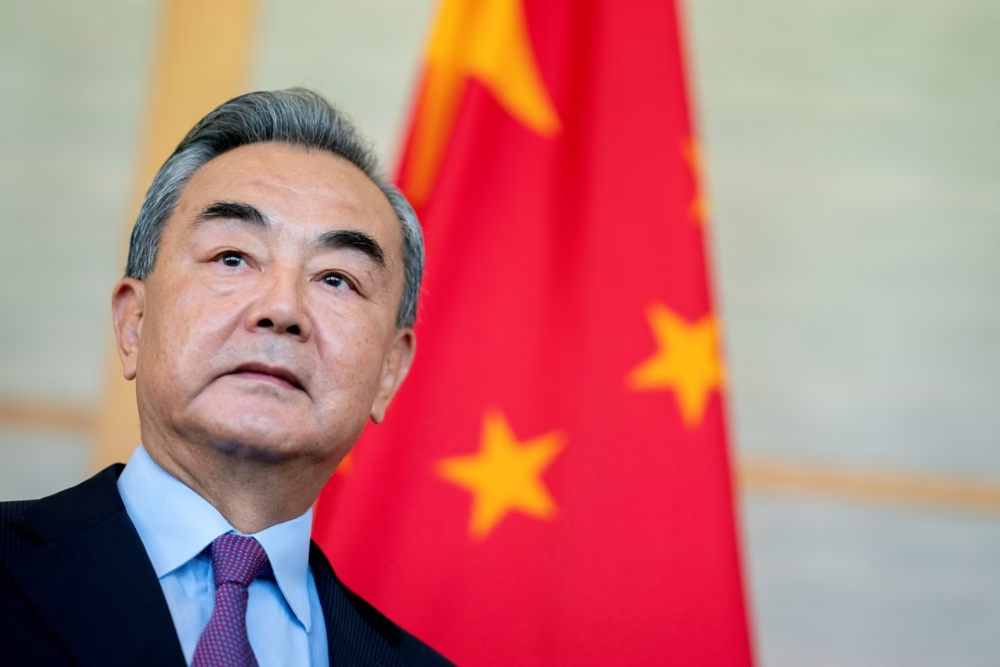
China did not remain silent. Foreign Minister Wang Yi addressed the issue during a press conference in Slovenia, sending a clear message to Washington and its allies. He stressed that China does not engage in wars or plan them, adding that sanctions and tariffs only make problems worse instead of resolving them.
Wang Yi’s remarks emphasized China’s commitment to multilateralism and the principles of the United Nations Charter. He argued that great powers should avoid confrontation and instead work toward cooperation, especially at a time when global challenges such as inflation, energy shortages, and climate change require collective solutions. According to him, rivalry and constant economic threats will only create more instability and chaos in the international system.
Why This Matters Globally
The U.S. and China are the world’s two largest economies, and any escalation in tariffs has global consequences. If Washington pushes for a 100 percent tariff on Chinese goods, supply chains could face severe disruptions. Electronics, consumer products, raw materials, and even essential goods could become more expensive.
For Europe, which trades heavily with both the U.S. and China, being forced to take sides may place them in a difficult position. Businesses and consumers would bear the cost, while global markets could see increased volatility. Investors are already watching the developments closely, as trade wars often lead to uncertainty and reduced economic growth.
Possible Outcomes
There are several possible outcomes if this tariff proposal gains momentum:
- Diplomatic Talks — China may push for discussions at the multilateral level, possibly involving organizations like the World Trade Organization (WTO).
- Countermeasures — If tariffs are imposed, Beijing could retaliate with its own tariffs, sanctions, or restrictions on U.S. goods and services.
- Global Market Impact — Tariff escalation may trigger inflationary pressures, disrupt industries, and shift global trade routes as countries look for alternatives.
- Alliances Tested — European nations may face pressure from both sides, testing NATO’s unity and raising questions about the balance between economic stability and political alliances.
Conclusion
The latest exchange between Washington and Beijing highlights how fragile global trade has become. Trump’s call for a 100 percent tariff on Chinese imports represents a high-stakes gamble aimed at reshaping global power dynamics, while Wang Yi’s response underscores China’s preference for dialogue, peace, and cooperation.
As the world waits to see what unfolds, one thing is certain, the outcome will have lasting consequences for economies, businesses, and ordinary consumers worldwide. The future of U.S.-China relations may determine not only the direction of international trade but also the stability of global politics.