

 Avik Roy Chowdhury
 Sunlight on Demand, Can This Futuristic Idea Really Light Up Our Nights?
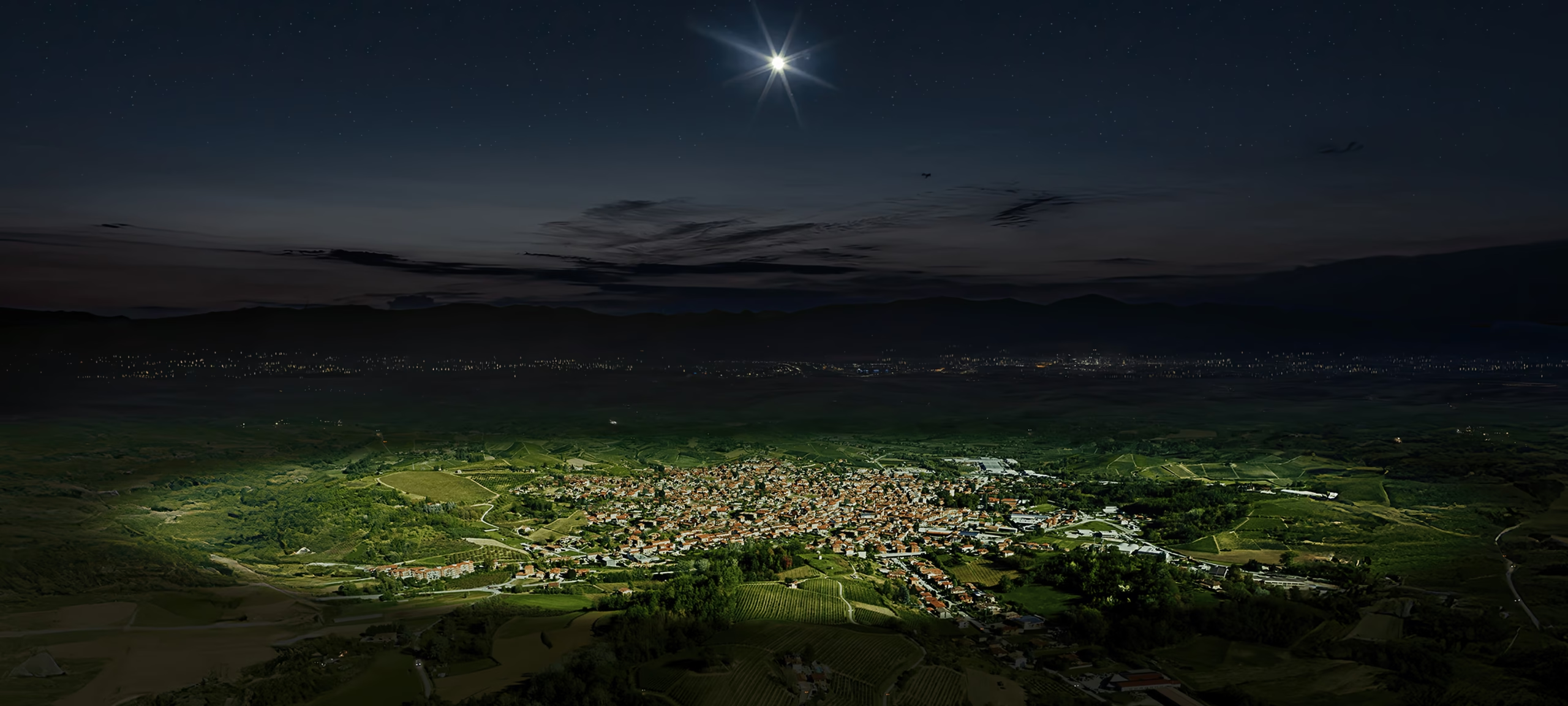
Imagine a world where sunlight never fades, where solar farms keep working even after sunset, and cities stay bright without switching on a single bulb. That’s exactly what a U.S. startup named Reflect Orbital is trying to achieve with its bold plan to deliver sunlight on demand using space mirrors.
Their concept is fascinating. Using orbiting satellites to reflect sunlight back to Earth after dark. But can it really work? And even if it can, do we actually want it?
What’s New in This Ambitious Space Project
Reflect Orbital’s idea sounds like something straight out of science fiction. The company plans to launch a test satellite, Earendil-1, around 2026 to see if it’s possible to reflect sunlight to specific locations on Earth.
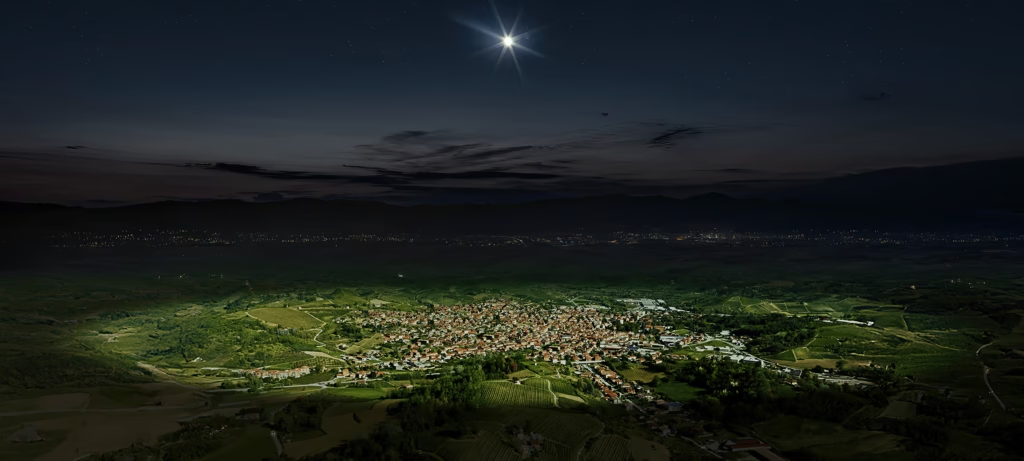
If successful, the startup aims to build a constellation of thousands of satellites by 2030, each equipped with large mirrors to direct sunlight toward the planet during nighttime. These satellite mirrors would orbit at about 625 kilometers above Earth and could shine up to 20% of the brightness of daytime sunlight on target areas.
This sunlight could power solar farms at night, illuminate disaster zones, or even brighten remote locations that lack electricity. It’s an innovative step toward a clean energy future, but not without controversy.
Potential Benefits of Sunlight on Demand
Supporters of the idea see tremendous opportunities. If Reflect Orbital succeeds, this technology could:
- Extend solar energy generation into the night, making renewable energy more reliable.
- Reduce dependence on fossil fuels and accelerate global clean energy goals.
- Provide emergency lighting during disasters or in off-grid areas.
- Lower electricity demand by offering natural, sustainable illumination.
It’s a bold vision that combines space innovation and climate technology, two of the fastest-growing sectors of the 21st century.
The Challenges and Concerns
However, not everyone is convinced that bringing sunlight back after dark is a good idea. Scientists, environmentalists, and astronomers are raising serious concerns.
- Light pollution: The artificial sunlight could outshine stars, disrupting astronomical research and obscuring night skies.
- Wildlife disruption: Nocturnal animals depend on darkness for feeding, migration, and reproduction. A permanent twilight could upset entire ecosystems.
- Human health risks: Continuous light exposure might disturb sleep cycles and mental well-being.
- Technical complexity: Aligning thousands of mirrors in orbit to reflect light precisely is a massive engineering challenge.
- Cost and feasibility: The project could require billions of dollars, and maintaining so many satellites would be difficult.
Experts argue that, while creative, the project might introduce more problems than it solves, especially when Earth already faces issues like light pollution and space debris.
Performance and Real-World Possibility
In theory, sunlight reflection from orbit works. In practice, it’s extremely hard. Sunlight spreads out as it travels through space, meaning the beam weakens by the time it reaches Earth. Even with massive mirrors, the light intensity would cover wide areas but be much dimmer than real daylight.
To keep one location illuminated all night, multiple satellites would need to take turns reflecting sunlight as Earth rotates, requiring precise timing, constant repositioning, and enormous coordination. For now, Reflect Orbital’s plan remains experimental, awaiting its first demonstration in space.
Conclusion: A Bright Idea or a Risky Experiment?
The dream of sunlight on demand is both inspiring and unsettling. Reflect Orbital’s vision to bring sunlight back to the dark side of Earth could revolutionize renewable energy, yet it also threatens to disrupt ecosystems and our connection to the natural night sky.
While technology could offer clean energy breakthroughs, the world must balance innovation and responsibility. Lighting up the night might sound futuristic, but sometimes, darkness has its own kind of beauty worth preserving.
As Reflect Orbital moves closer to testing its idea, the world will be watching closely, to see if this space-powered light revolution truly shines or fades into the shadows.

 The TechQuilt