

 The TechQuilt
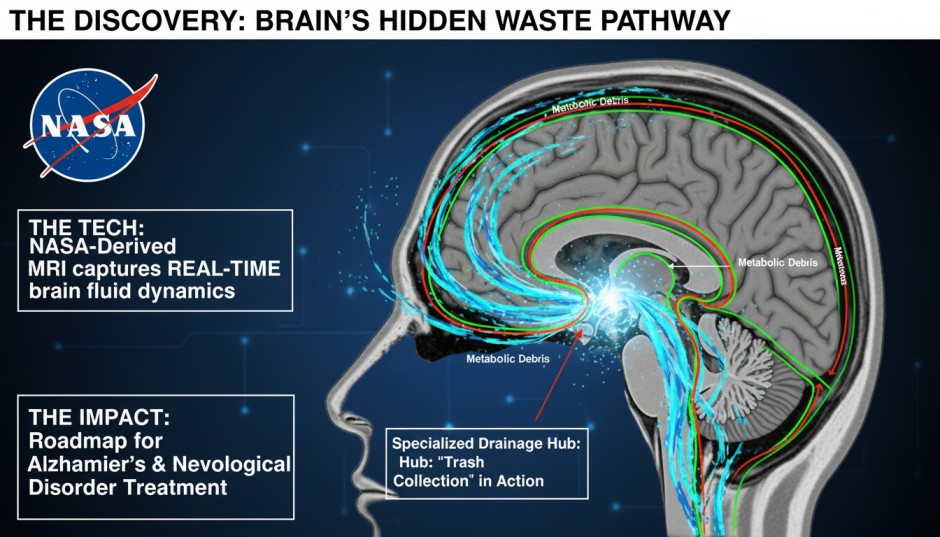
 - The Discovery: A hidden waste-removal pathway in the human brain has been caught in action, confirming a specialized “drainage” hub that clears metabolic debris.
- The Tech: This breakthrough utilized NASA-derived MRI technology, originally built for spaceflight, to capture real-time fluid dynamics inside the skull.
- The Impact: By establishing a baseline for how healthy brains “take out the trash,” this research provides a roadmap for diagnosing and treating Alzheimer’s and other neurological disorders.
For decades, the medical community operated under a fundamental assumption: the brain was an island, isolated from the body’s immune and lymphatic systems by the formidable blood-brain barrier. We knew the brain produced waste, but how it managed to “take out the trash” remained one of the most frustrating enigmas in neuroscience. That era of uncertainty has ended. A landmark study has finally caught the brain’s drainage system in the act, and the implications are transformative. This isn’t just an incremental update; it is a total recalibration of human anatomy that links our most complex organ directly to the body’s natural waste-management infrastructure.
The Standard Consensus: A Hidden “Drain” Revealed
The mainstream reporting on this discovery focuses primarily on the identification of a lymphatic drainage network. Researchers have confirmed that the middle meningeal artery (MMA) serves as a primary hub for this system. Using high-resolution imaging, they observed fluids moving in a slow, steady pattern entirely distinct from the rapid pulse of blood. The general consensus is that we have finally found the “drain,” a discovery that holds the key to understanding why some brains remain healthy while others succumb to neurodegenerative decay.
Decoding the Fluid Dynamics: The NASA Connection
While the discovery of the system itself is making headlines, the technical execution of this study reveals the true depth of this breakthrough. This wasn’t achieved with standard hospital equipment. To capture these images, the scientific team utilized one of the most advanced MRI tools currently available—a technology born from a direct collaboration with NASA. Originally engineered to monitor how the rigors of spaceflight shift fluids inside the skulls of astronauts, this specialized hardware has been repurposed to map the “plumbing” of the human brain with unprecedented precision.
This is a pivotal development because the research moved beyond static snapshots. By monitoring five healthy individuals for over six continuous hours, the team was able to capture the real-time movement of cerebrospinal and interstitial fluids. This granular, long-duration observation allowed them to watch the brain’s lymphatic structures functioning live. Though the study is still ongoing, the ability to observe these mechanical processes as they happen is what will eventually allow us to understand how to “flush” the toxic proteins associated with diseases like Alzheimer’s.
A New Baseline for Neuroscience
The significance of this research lies in its focus on the “normal.” By establishing exactly how a healthy brain clears waste over a six-hour cycle, we finally have a gold-standard baseline for brain health. In the near future, this data could allow clinicians to use a quick MRI scan to determine if a patient’s drainage system is sluggish decades before the first symptoms of memory loss appear. We are witnessing a shift from reactive medicine to proactive, technical maintenance of the brain’s physical health.
Final Verdict: Is it Worth the Hype?
The short answer is yes. While the sample size is currently focused on a small group of healthy individuals, the integration of space-grade imaging into neurological diagnostics is a fundamental shift. We are no longer theorizing about how the brain cleans itself; we are watching it happen. The ability to monitor this system in real-time using NASA-derived technology makes this one of the most credible and exciting developments in modern neuroscience. The hype is not just justified—it is a glimpse into the future of preventative brain health.