



 The TechQuilt
 In Summary
- American Airlines rejects merger talks with United Airlines, officially shutting down persistent rumors of an industry shaking consolidation.
- The proposed combination faced intense opposition from consumer advocates and government officials worried about skyrocketing ticket prices.
- Executives at American Airlines stated they are simply not interested in the deal, pointing to massive regulatory hurdles and antitrust concerns.
American Airlines rejects merger talks with United Airlines, decisively killing what could have been the largest aviation consolidation in over a decade. When rumors surfaced that United Airlines executives approached the federal administration to pitch a monumental tie up, the aviation sector braced for a seismic shift. However, that speculation was swiftly grounded. Instead of entertaining a deal that would reshape global travel, American Airlines stepped forward to shut the door completely, leaving industry analysts and travelers dissecting what this means for the future of commercial flights.
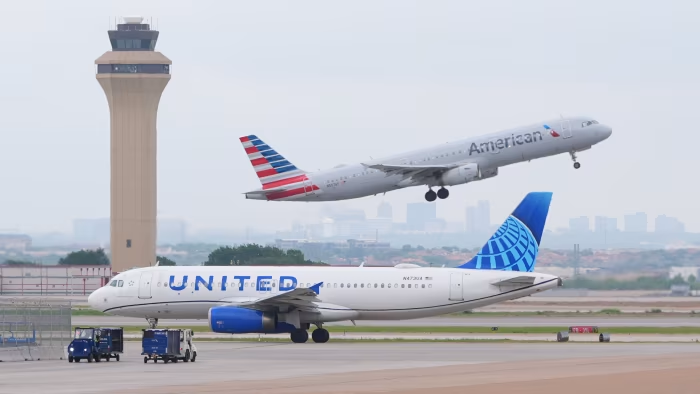
The standard consensus circulating across major financial and aviation news outlets reveals a clear, unified narrative regarding these developments. United Airlines was actively testing the waters for a massive corporate combination, specifically hoping that pitching the idea directly to top government officials might pave the way for creating an unstoppable global competitor. Most reporters and financial analysts agree that achieving such an unprecedented scale would naturally invite extraordinary scrutiny from labor unions, consumer watchdogs, and federal regulators. The general agreement across the board is that reducing the domestic airline market to even fewer dominant players would almost certainly lead to higher passenger fares and significantly fewer choices for everyday travelers.
The Unique Reality
Looking past the basic daily headlines, several unique and highly critical factors highlight exactly why this proposed deal never truly took flight. First, American Airlines firmly rejected the merger while specifically citing severe competition concerns and strict federal regulations as their primary reasons for the refusal. A consolidation of this immense magnitude conflicts directly with modern antitrust laws, which are fundamentally designed to protect fair market dynamics and prevent corporate monopolies.
Second, the underlying proposal immediately faced significant opposition from passionate consumer advocates and numerous other government officials. These groups voiced immediate alarm that merging two massive, deeply entrenched airline networks would create localized monopolies, especially given their overlapping hub operations in major metropolitan areas like Chicago and throughout Texas. Such an overlap would ultimately harm the traveling public by drastically reducing available flight options.
Finally, and perhaps most importantly, American Airlines explicitly stated to the public and the financial markets that it is simply not interested in the merger at all. The legacy carrier made it abundantly clear that its corporate focus remains entirely on executing its own long term strategic objectives. Rather than navigating the legal nightmare and operational chaos of an unwanted corporate marriage, the airline prefers to compete organically. This firm public stance immediately distances the company from the ongoing market volatility and the persistent, distracting rumors of industry restructuring.
Final Verdict
The concept of a United and American Airlines super carrier is certainly a fascinating corporate thought experiment, but the reality of such a deal is much less appealing. Is this merger hype actually worth the sustained attention? The clear, objective answer is no. A financial deal of this astronomical size would ultimately stifle healthy market competition, relentlessly drive up ticket prices for families, and trigger years of messy, expensive legal battles with federal regulators. The executive leadership at American Airlines made the correct, highly calculated choice by walking away before any official talks even began. For everyday consumers and the broader commercial aviation market, this definitive rejection is a massive victory that preserves essential, necessary competition in the skies.