



 The TechQuilt
 America’s 100% Tariffs on China Explained, What It Means for India’s Export Growth
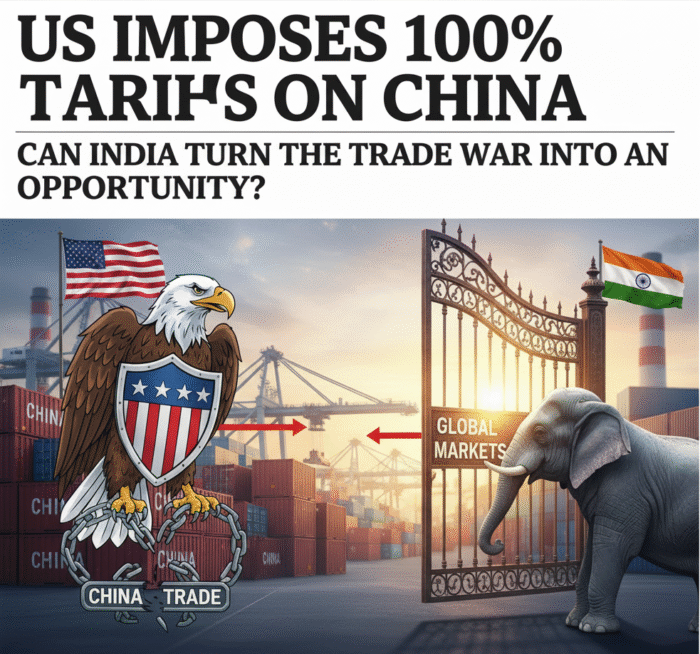
The United States has dropped a bombshell in the global trade arena, announcing 100 percent tariffs on Chinese imports. This move has intensified the ongoing trade tensions between the world’s two largest economies. But amid the tariff war, many experts believe India could be one of the biggest beneficiaries if it plays its cards right.
US Targets China with Hefty Tariffs
Starting November 1, the US will impose a 100% tariff on goods imported from China, effectively making Chinese products nearly double in price for American buyers. According to a detailed report this decision follows increasing concerns about China’s export policies and dominance in global manufacturing.
The new tariff is seen as an attempt by Washington to protect domestic industries and reduce dependence on Chinese supply chains. However, it also creates a vacuum, and that’s where India could step in.
How India Stands to Gain
As Chinese goods become more expensive in the US, importers will inevitably look for cheaper and reliable alternatives. This is where India’s manufacturing and export sectors can seize the moment.
Industry experts say India can benefit most in areas such as textiles, electronics, auto components, pharmaceuticals, chemicals, and solar panels. With growing production capabilities and a skilled workforce, India is already seen as a promising alternative to China.
“India is well-positioned to fill the gap created by higher tariffs on Chinese goods,” said economists quoted in the Times of India report. They add that if India ensures quality, quick delivery, and consistent supply, global buyers will naturally shift their focus here.
Challenges on the Road Ahead
While the opportunity is significant, India also faces serious challenges. To truly capitalize, the country needs to address a few key areas:
- Improve Infrastructure and Logistics – Efficient ports, faster customs clearances, and better transport networks are crucial for exporters to stay competitive.
- Ensure Quality and Compliance – US buyers demand strict quality checks and sustainability standards. Indian firms must maintain global benchmarks to retain trust.
- Negotiate Trade Deals – The government can use this situation to negotiate favorable trade terms with the US to encourage exports from India.
- Ease of Doing Business – Simplifying regulations and offering export incentives can help attract more manufacturing investments.
Experts warn that without quick reforms, India may lose this window of opportunity to other emerging economies like Vietnam or Mexico, which are also ramping up their export capacity.
Global Trade Dynamics Changing
This tariff move also highlights how global supply chains are shifting post-pandemic. The US wants to diversify manufacturing sources and reduce reliance on China. A strategy that benefits nations like India.
In the long run, India’s success will depend on how effectively it can position itself as a dependable global supplier. The government’s Make in India initiative and recent trade partnerships could play a key role in driving this transition.
Conclusion
The US-China tariff war is reshaping global trade, and India now stands at a strategic crossroads. A 100% US tariff on Chinese imports may hurt global prices in the short term, but for India, it’s a wake-up call and an opportunity.
If Indian exporters can step up, maintain quality, and strengthen infrastructure, the country could see a surge in export growth and establish itself as a strong alternative to China in global markets.